
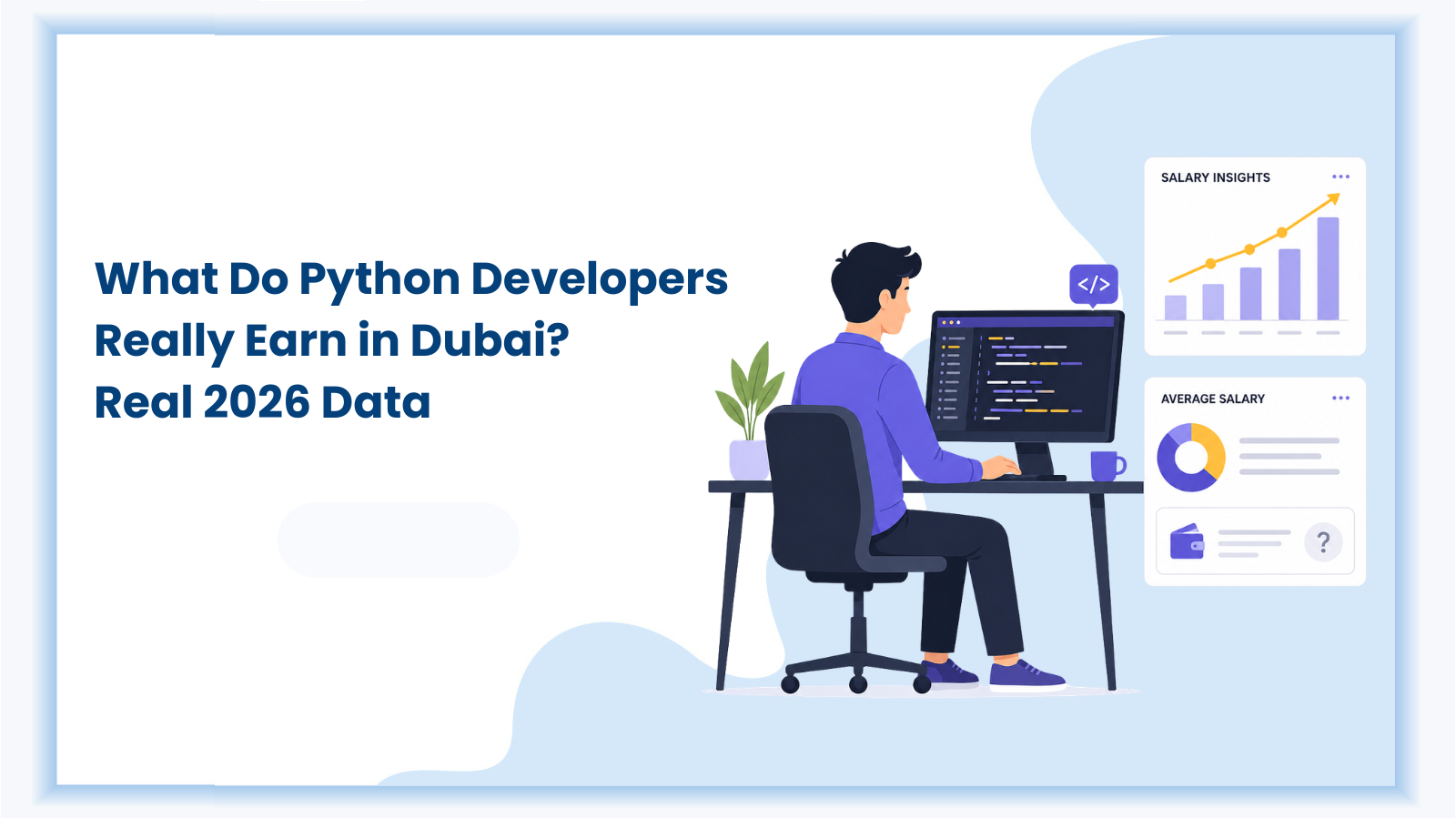
Python continues to be one of the most sought-after programming languages in 2026, and the Python developer salary in Dubai reflects that demand. With its applications in fintech, healthcare, e-commerce, and even AI, there is a strong business demand for skilled Python developers who can build secure applications.
The first question that pops up when considering Python programming as a career is: How much can you earn in Dubai?
Depending on skill and experience, the answer varies. But here’s a quick guide to what Python developers really earn in Dubai, the latest 2026 salary estimates, market demand, and how you can start your Python training in Dubai.
How Much Do Python Developers Earn in Dubai?
Competitive salaries are a great incentive to start learning Python. The demand continues to grow, and start-ups, MNCs and government organisations are looking to onboard Python developers across Dubai.
Experience Level | Estimated Monthly Salary (AED) | Estimated Annual Salary (AED) |
Entry Level (0–2 years) | 8,500 – 12,000 | 102,000 – 144,000 |
Mid-Level (3–5 years) | 13,000 – 20,000 | 156,000 – 240,000 |
Senior Developer (6–9 years) | 22,000 – 35,000 | 264,000 – 420,000 |
Lead Python Developer | 35,000 – 50,000+ | 420,000 – 600,000+ |
These figures are indicative market estimates and may vary based on company, industry, certifications, and technical expertise.
Various companies offering the most competitive Python developer salaries in Dubai also offer added perks. This includes health insurance, annual bonuses, relocation benefits, flexible work options, and professional development opportunities.
Python Job Market in Dubai: Why Demand Continues to Grow
UAE is investing in digital transformation, AI and cloud computing fields. With smart initiatives, there is a need for developers capable of building modern solutions. Python is used across all of the following applications:
- Web development
- AI and machine learning
- Data analytics
- Automation
- Cybersecurity
- Cloud applications
- Business software
Whether you’re looking for Python developer jobs in Dubai or planning to become a software engineer there, Python opens up opportunities across multiple industries. This is because many employers are looking for developers who understand APIs, databases, and cloud systems.
If you’re comparing different coding languages before starting your career, read our guide on the Top 10 Programming Languages to Learn in 2026.
What Affects a Python Developer's Salary?
Every Python developer’s salary depends on:
Experience
More experience equals better pay for developers. Higher experience usually correlates to better understanding of solving technical challenges and complex projects.
Technical Skills
Learning Python along with complementary skills such as:
- Django
- Flask
- FastAPI
- SQL
- Git
- Docker
- REST APIs
- AWS or Azure
Companies prefer individuals who have real on-the-ground practical knowledge, which gives them a better opportunity to learn.
Industry
Certain industries are in greater demand, including fintech, AI, and banking. These pay better than developers opting for smaller websites or internal tools.
Certifications
Completing a recognised Python certification course demonstrates your skills and commitment to employers. Certifications are the perfect add-on to experience. It can strengthen your profile, especially if you’re starting your career.
A recognised certification can help validate your skills and add credibility to your profile. Learn more about KHDA Certification in Dubai and why it matters for career growth.
Top Python Career Paths and In-Demand Skills
Python offers several high-paying technology careers.
Career Path | Common Responsibilities |
Python Developer | Build software applications and backend systems |
Web Developer | Develop websites using Django and Flask |
Data Analyst | Analyse and visualise business data |
Machine Learning Engineer | Build AI models and predictive systems |
Automation Engineer | Automate repetitive business processes |
Backend Developer | Create APIs and server-side applications |
A strong python knowledge, combined with good communication, logical thinking, debugging, are all important for a good job
Strong communication, logical thinking, debugging, and problem-solving skills are equally valuable alongside technical knowledge.
If you’re interested in working with business intelligence or analytics, Python is one of the core skills employers look for. You may also find our guide on How to Become a Data Analyst in 2026 helpful.
Python vs Other Programming Languages: Salary & Career Comparison in Dubai
Programming Language | Average Monthly Salary (AED) | Common Career Paths |
Python | 8,500 – 35,000+ | AI, Data Science, Web Development, Automation |
Java | 10,000 – 32,000 | Enterprise Applications |
JavaScript | 9,000 – 30,000 | Front-end & Full Stack Development |
C# | 10,000 – 30,000 | Microsoft Technologies |
PHP | 8,000 – 22,000 | Website Development |
Python is in high demand for the value and versatility it offers. This single language can be used for web development, automation, artificial intelligence, cloud computing, and data science, making it one of the safest career choices in 2026.
Most still wonder, “Is Python worth learning in 2026?” Python is a valuable tool for developers with a growing demand across industries.
How to Start a Career in Python Development
If you’re new to coding, Python is a great place to start. A beginner-friendly course can help you learn the basics step by step without feeling overwhelmed.
If you’re wondering how long it takes to learn Python, most learners can grasp the fundamentals within 2 to 3 months with regular practice. Becoming industry-ready takes between six months and a year, depending on your learning pace and project experience.
Here’s a practical roadmap:
- Learn Python fundamentals.
- Build hands-on coding projects.
- Understand databases and SQL.
- Learn Django or Flask for web development.
- Create a GitHub portfolio.
- Complete a recognised Python course.
- Apply for internships and junior developer roles.
For beginners, an online Python programming course or Python training in Dubai helps you learn step by step through practical projects and hands-on training. If you’re looking to build practical coding skills, exploring DG Training & Development Institute’s Python Training Course in Dubai is an excellent option. Get hands-on experience, work on live projects, and prepare for certification and employment.
Along with Python, learning the right technical skills can improve your career prospects. Explore our guide on Top Skills to Learn in 2026.
Conclusion
Demand for skilled developers continues to rise as businesses across Dubai invest in digital transformation, AI, automation, and cloud technologies. That makes Python a valuable skill for anyone looking to build a future in software development.
Whether you’re starting from scratch or switching careers, the right training and hands-on practice can help you develop job-ready skills and confidently apply for opportunities across the UAE’s growing tech sector. A structured Python Training Course in Dubai can further help you build practical coding knowledge and strengthen your foundation for a career in development.
Yes. Python remains one of the most widely used programming languages for AI, automation, web development, cloud computing, and data science. Demand continues to grow across Dubai and the UAE.
Depending on experience and technical skills, developers typically earn between AED 8,500 and AED 35,000+ per month.
Most beginners can learn the basics within two to three months. Becoming job-ready generally takes six to twelve months with consistent practice.
Yes. Most python programming for beginners courses start with programming fundamentals before moving to advanced topics like web development and databases.
Python professionals are hired in banking, fintech, healthcare, education, logistics, e-commerce, cybersecurity, AI, cloud computing, and government technology projects.
A recognised certification helps validate your skills and can improve your chances of securing interviews, particularly if you’re new to programming or changing careers.